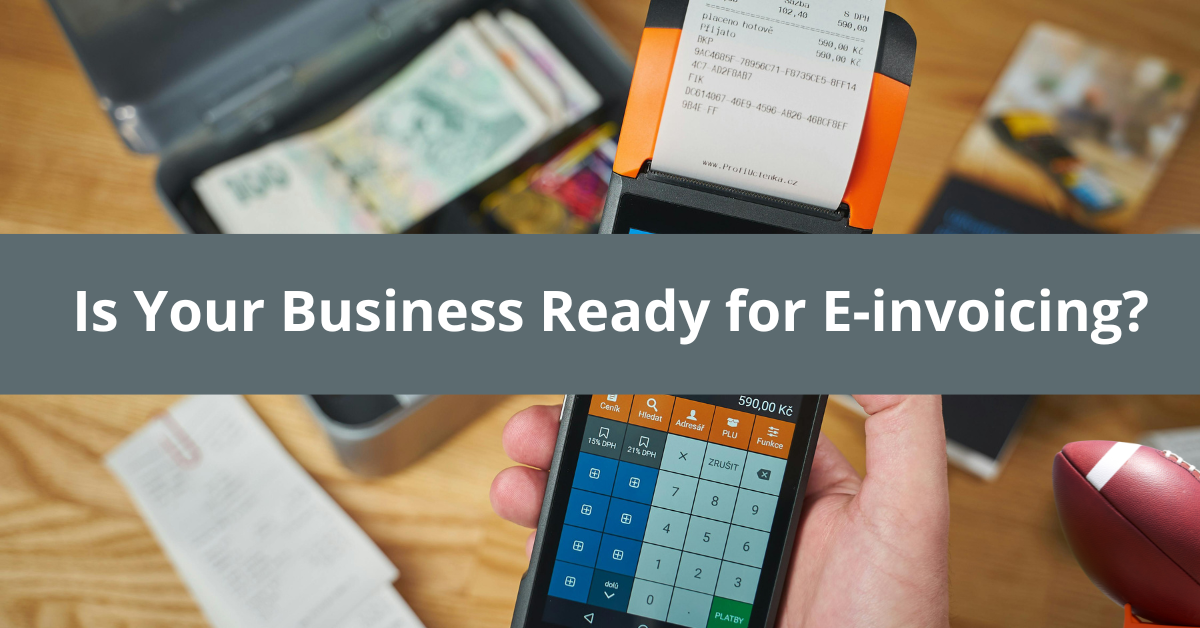
The Bureau of Internal Revenue (BIR) has issued Revenue Memorandum Circular (RMC) No. 98-2026, providing guidelines on the issuance of electronic invoices or e-invoicing under existing BIR regulations.
Electronic invoicing is not simply about using a computer to prepare invoices or sending them to customers through email. Businesses must also check their invoicing software, secure the required BIR authority, train their employees, and prepare for possible system problems.
Here are five things every business should check to prepare for electronic invoicing.
1. Check If Your Business Is Required to Use E-invoicing
Not all businesses have the same electronic invoicing requirements. Your obligation depends on your taxpayer classification and the applicable BIR rules.
Businesses that may be required to use e-invoicing include certain small, medium, and large taxpayers engaged in online transactions, taxpayers under the Large Taxpayers Service, certain large taxpayers covered by the Ease of Paying Taxes Act, and taxpayers using specific accounting or invoicing systems with electronic invoicing capabilities. The BIR may also require other taxpayers to comply.
Micro taxpayers are exempt from mandatory e-invoicing, although they may choose to adopt it voluntarily, subject to the applicable requirements.
What should you do?
Check your taxpayer classification and determine whether your business is covered by the mandatory e-invoicing rules. Do not assume that the requirements apply to everyone or that your business is automatically exempt.
2. Check If Your Invoicing Software Is Compliant
Do you prepare invoices using Excel, Word, or Google Sheets? Do you save your invoices as PDF files and email them to customers?
These practices do not automatically qualify as compliant electronic invoicing.
Under the BIR guidelines, an electronic invoicing system must be capable of preparing and transmitting invoice information in the required electronic format, including JSON.
JSON is simply a way of organizing information so that computer systems can read and exchange it. You do not need to understand the technical details, but your invoicing system must be capable of meeting the BIR’s requirements.
What should you do?
Contact your software provider, POS vendor, or e-invoicing service provider. Ask whether your current system complies with the BIR’s electronic invoicing requirements and whether you need to upgrade or change anything.
Remember, an invoice does not become compliant electronic invoicing simply because it was created on a computer.
3. Check If You Have the Required BIR Permit
Having invoicing software is only one part of compliance. Covered businesses must also secure the appropriate authority from the BIR.
Under the guidelines, covered taxpayers generally need to apply for a Permit to Issue Electronic Invoice (PTI Electronic Invoice) through the appropriate Revenue District Office (RDO) or Large Taxpayers Office.
The BIR provides an evaluation period of 20 working days after receiving the complete application requirements.
Businesses must also obtain the required Electronic Invoicing System Certification within the prescribed period after the permit is approved to maintain the validity of their authority.
What should you do?
Check which permits and certifications your business needs and prepare the requirements early. Do not assume that your existing CAS registration, Permit to Use (PTU), or Acknowledgement Certificate automatically satisfies the electronic invoicing requirements.
4. Know How to Correct an Invoice
What happens if you issue an invoice and later discover an error? What if a customer returns an item, receives a discount, or was charged too much?
Under the electronic invoicing rules, you cannot simply delete or edit an invoice that has already been issued to change the transaction.
Instead, you must follow the proper procedure for correcting or adjusting the invoice.
For example, if the amount needs to be reduced because of a return, discount, allowance, or overbilling, you may need to issue the appropriate Credit Note or Credit Memo. If you need to charge an additional amount, you must issue the appropriate electronic invoicing document under the applicable rules.
What should you do?
Make sure your accounting and sales teams understand how to handle invoice corrections, returns, discounts, and additional charges. Establish a clear procedure so employees know what documents to issue and how to record the adjustments properly.
5. Prepare for Brownouts, Internet Problems, and System Downtime
What happens if your internet connection suddenly stops working, the power goes out, or your invoicing software experiences a technical problem?
Businesses still need a way to document transactions when their electronic invoicing system is unavailable.
Under the guidelines, businesses should have BIR-authorized manual invoices available for use during system downtime, subject to the applicable requirements.
Once the system is working again, the corresponding electronic invoice must be issued according to the prescribed rules, including the required reference to the manual invoice.
Businesses should also be ready to provide printed copies of electronic invoices when customers request them.
What should you do?
Prepare a backup procedure for system interruptions. Make sure your employees know when and how to use manual invoices, how to record those transactions, and what to do once the electronic invoicing system becomes available again.
Having compliant software is important, but knowing what to do when it stops working is just as essential.
E-invoicing Is Not Just an IT Concern
One common mistake is to treat electronic invoicing as something that only the IT department or software provider needs to handle.
In reality, several parts of the business are involved. Accounting and tax personnel must understand the BIR requirements. The IT team and software provider must ensure that the system works properly. Finance, sales, and operations personnel must know how to issue invoices, process adjustments, and handle system downtime.
Business owners should review their current invoicing procedures, identify what needs to be improved, and ensure that employees receive the proper guidance and training.
Final Reminder: Check These Five Things Before You Start
Before implementing electronic invoicing, make sure you can answer these five questions:
- Is my business required to use e-invoicing?
- Can my current invoicing software meet the BIR requirements?
- Have I secured the necessary permits and certifications?
- Do my employees know how to correct invoices and process adjustments?
- Do we have a backup procedure for brownouts, internet interruptions, and system failures?
If you cannot answer yes to all five questions, it may be time to review your current setup.
RMC No. 98-2026 highlights the importance of preparing for electronic invoicing beyond simply choosing a software provider. Businesses need the right system, the necessary BIR authority, and employees who understand the process.
The goal is simple: Make sure your business is ready to issue invoices properly, handle common problems, and comply with the applicable BIR requirements.
————-
Need Help Preparing Your Business for E-invoicing?
Understanding BIR requirements can be challenging, especially when you also have day-to-day business operations to manage. Getting the right guidance can help you understand your compliance obligations and identify the steps your business needs to take.
DJKA Accounting Services is here to help. Whether you need assistance understanding the electronic invoicing requirements, reviewing your existing invoicing setup, or determining the necessary BIR permits and registrations, our team can help you navigate the process.
Email us at info@djkaaccounting.com to discuss your business needs and get the guidance you need to prepare for electronic invoicing.
Let us help you stay informed, prepared, and compliant with BIR regulations. You can also follow us on Facebook.